Field-Tested Innovation
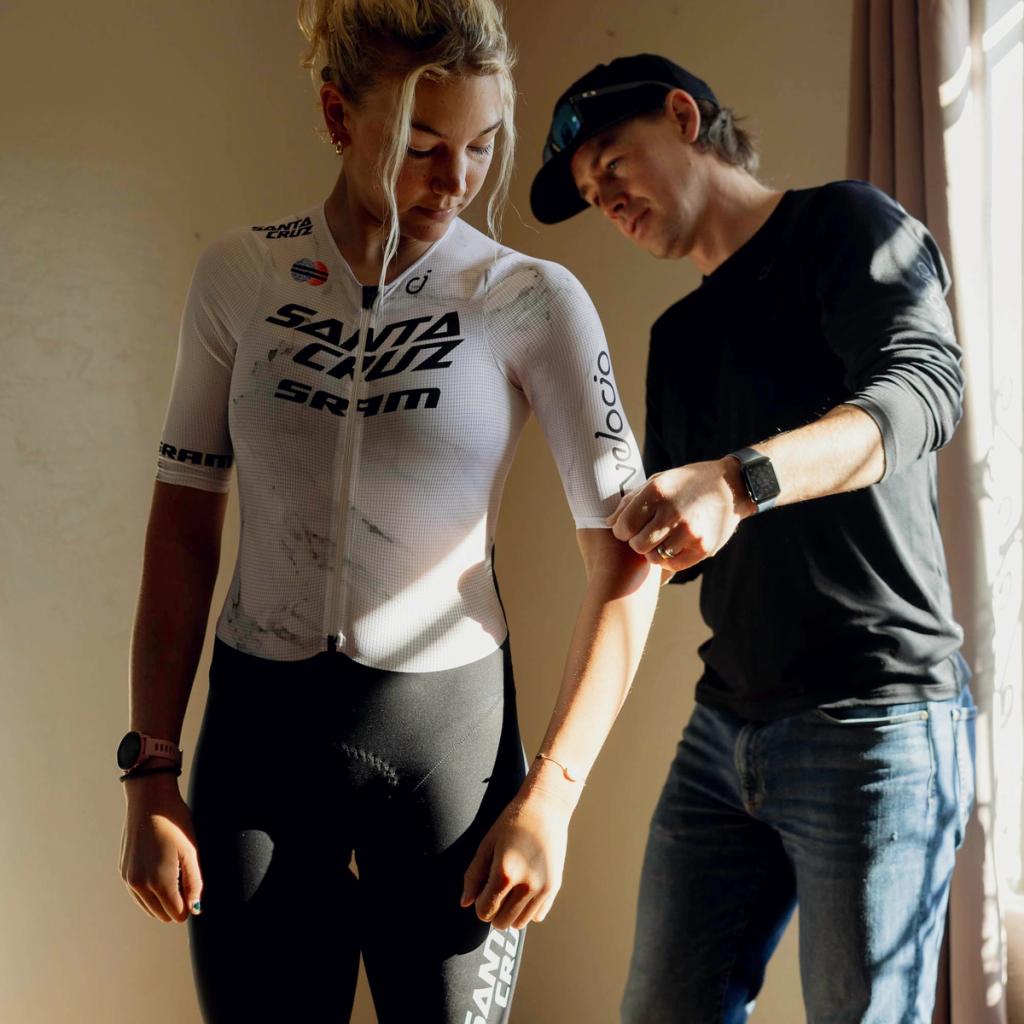
We invited author, journalist, and cyclist Kelton Wright to take a closer look at the inner workings of how Velocio apparel is realized and created. First she dissected how our most advanced CONCEPT race kit is created.
Now she's taking a look at our podium-topping TRAIL apparel.

Design Solutions
Mist weaves through the evergreens, tires hum through the mud, and fabric flexes and breathes in time with the climb. Out here, design meets its truth—tested by weather, refined by motion.
Before a fabric becomes a jacket, it’s ridden until it either gives in or gives back. Velocio turns that memory into something lasting—each seam a conversation between rider, mill, and mountain, about what endurance really means. Every season begins the same way: not with trend reports or color forecasts, but with real rides, real feedback, and the question at the heart of every design—what will hold up to grit and sweat, comfort and motion, time and use?
Because Velocio doesn’t design to fill a catalog. They design to solve for the ride.

Built on Experiences
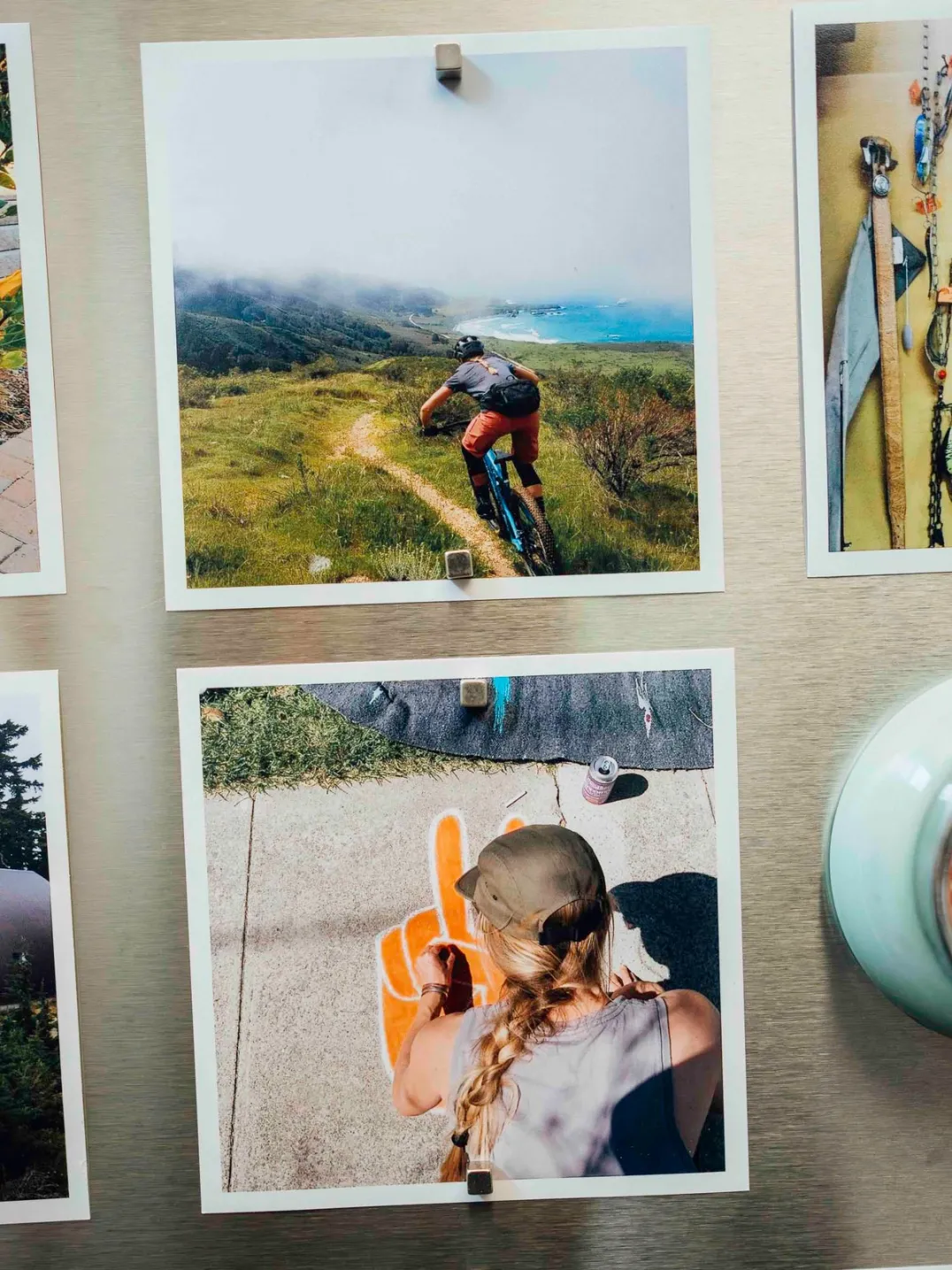
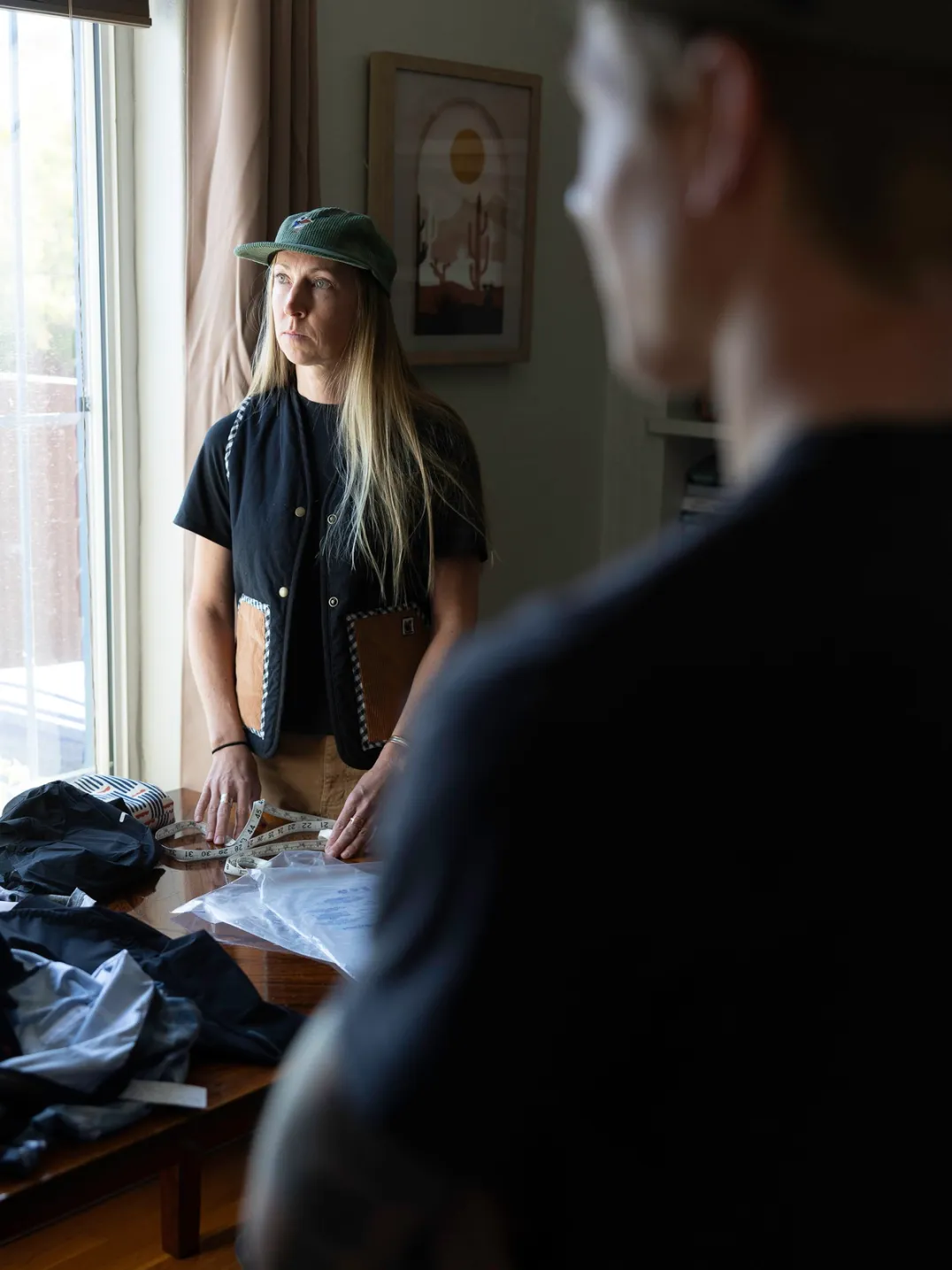
Designer Tara Conway is one of the voices shaping that process. She grew up between the dense forests of Northern Ontario and the coast of California, where she could ride year-round. Her mother, an artist and lifelong maker, taught her to sew, to value quality construction, and to see a garment as something built from an idea rather than a trend. Years later, after living off-grid in the Pacific Northwest—hauling water, mending her own gear—Tara learned what it really means to live within limits. Those limits became her design lens: durable, repairable, built to outlast impulse. Experiences that now shape the way Velocio approaches every design challenge.
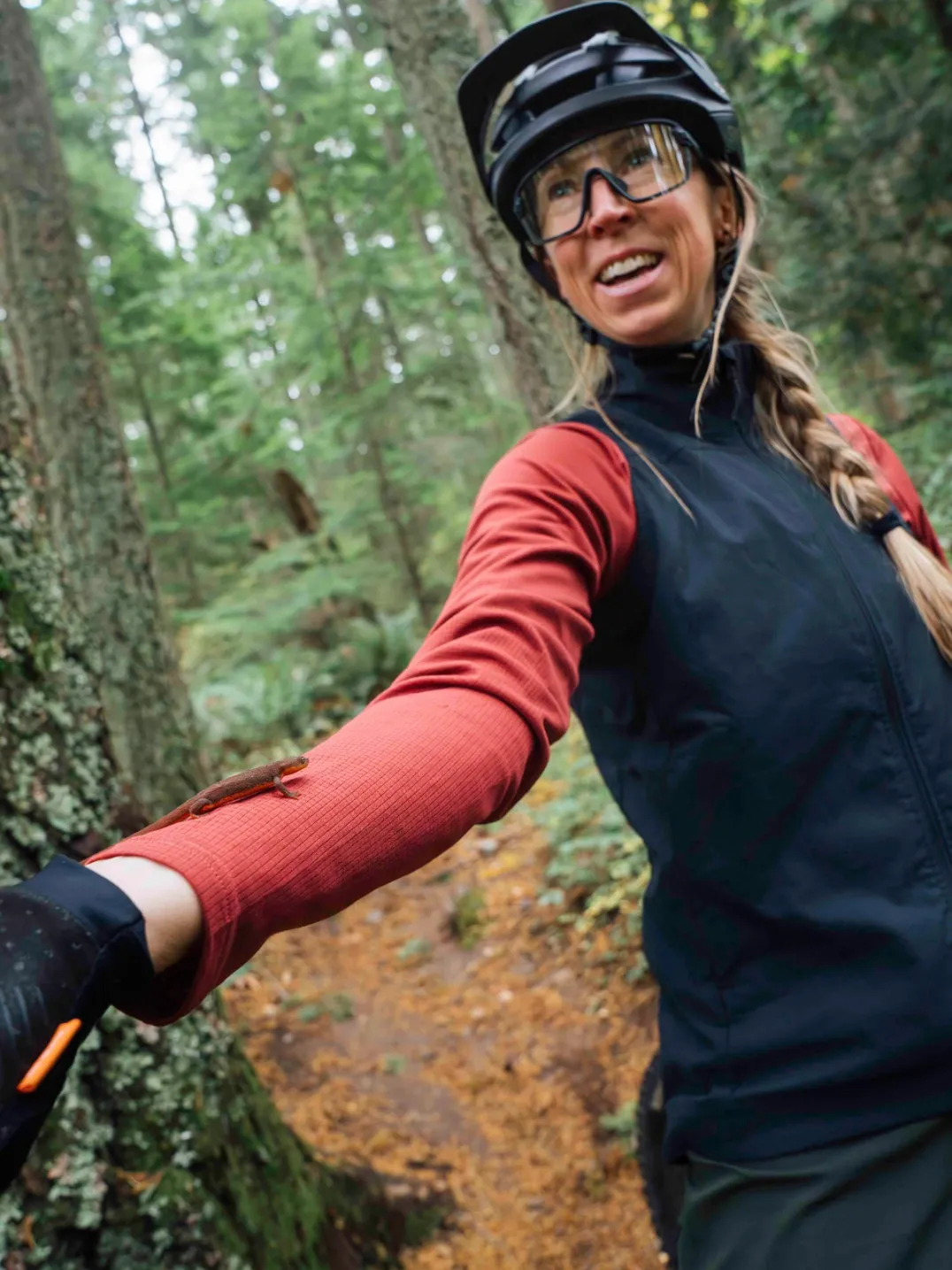
Velocio’s commitment to quality begins long before a pattern is cut. Tara starts that process not behind a desk, but on a trail. Riding through mist and mud in the Pacific Northwest, she’s testing how fabrics stretch, breathe, and shed water long before they reach the cutting table.

"Velocio doesn’t design to fill a catalog. They design to solve for the ride."

"The whole design team spends time with the mills and factories that produce their fabrics—walking factory floors one week and singletrack the next— studying processes, experimenting with new blends, and pushing for smarter innovation."
Hands On
The whole design team spends time with the mills and factories that produce their fabrics—walking factory floors one week and riding singletrack the next— studying processes, experimenting with new blends, and pushing for smarter innovation. “It’s about building relationships, not just placing orders,” Tara explains.
The team works with mills that hold high standards and share their drive to minimize waste. They look for fabrics that are durable, repairable, and responsibly made, designing from the first sketch to the final stitch with longevity in mind.
That kind of hands-on testing defines Velocio’s process. With a small team of designers spread across the United States, Velocio’s team touches every stage of the process. There’s no handoff from concept to production; they sketch, sew, prototype, and test everything themselves. One might be logging winter miles through a Vermont snowstorm while Tara’s pedaling through cedar forests in British Columbia drizzle. They return with field notes instead of spreadsheets, comparing how each piece performs across climate, terrain, and body type.
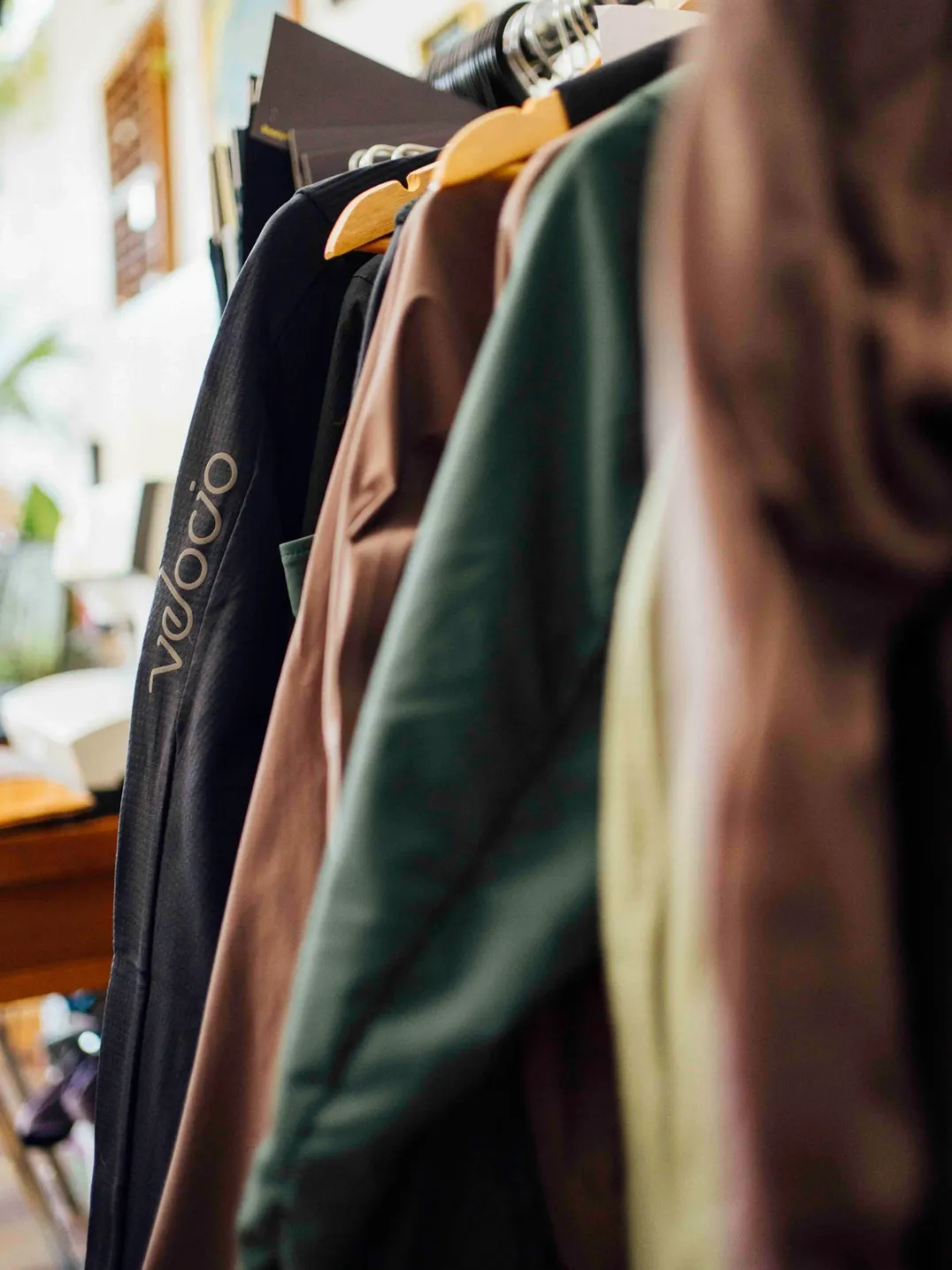
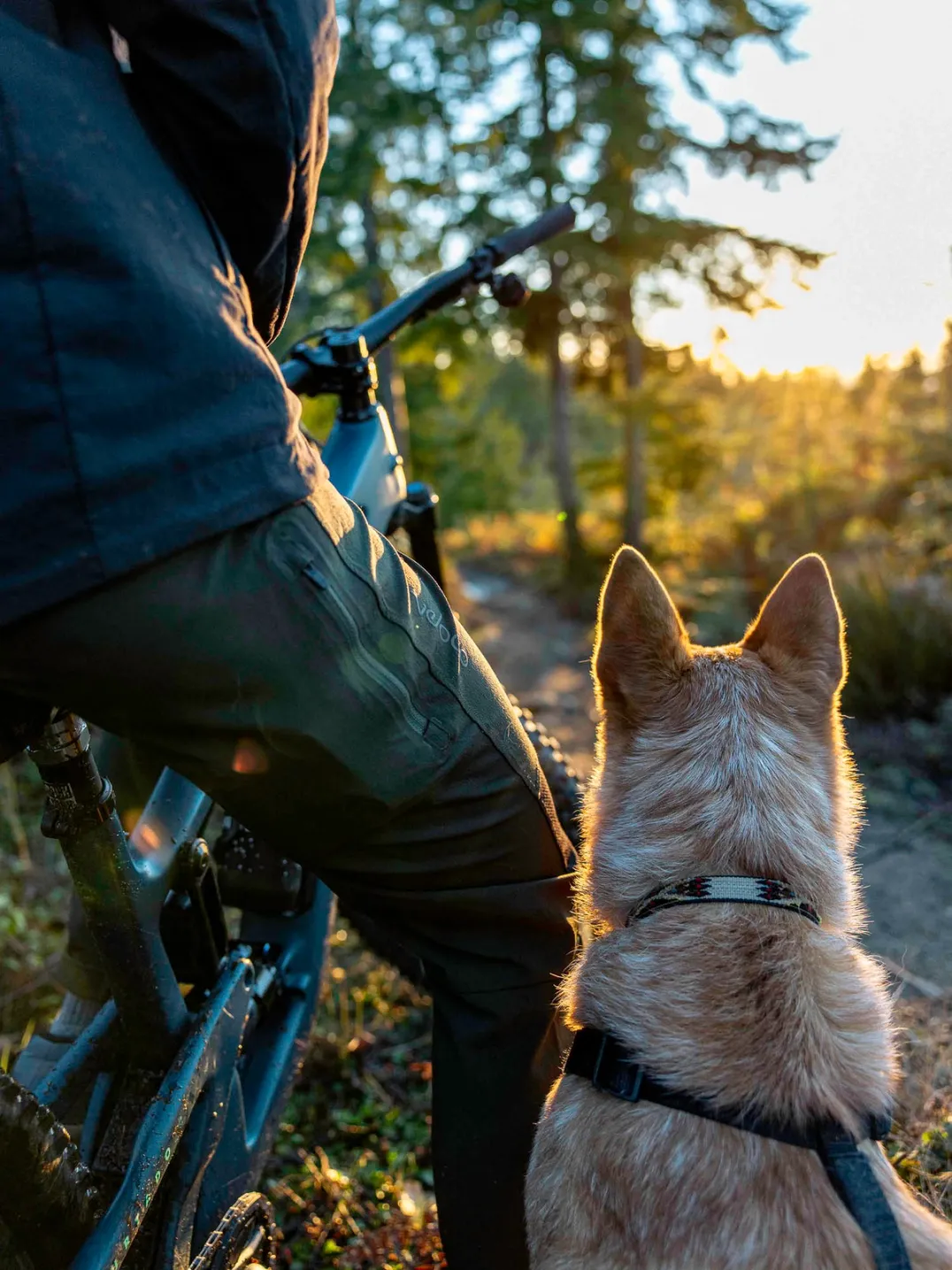
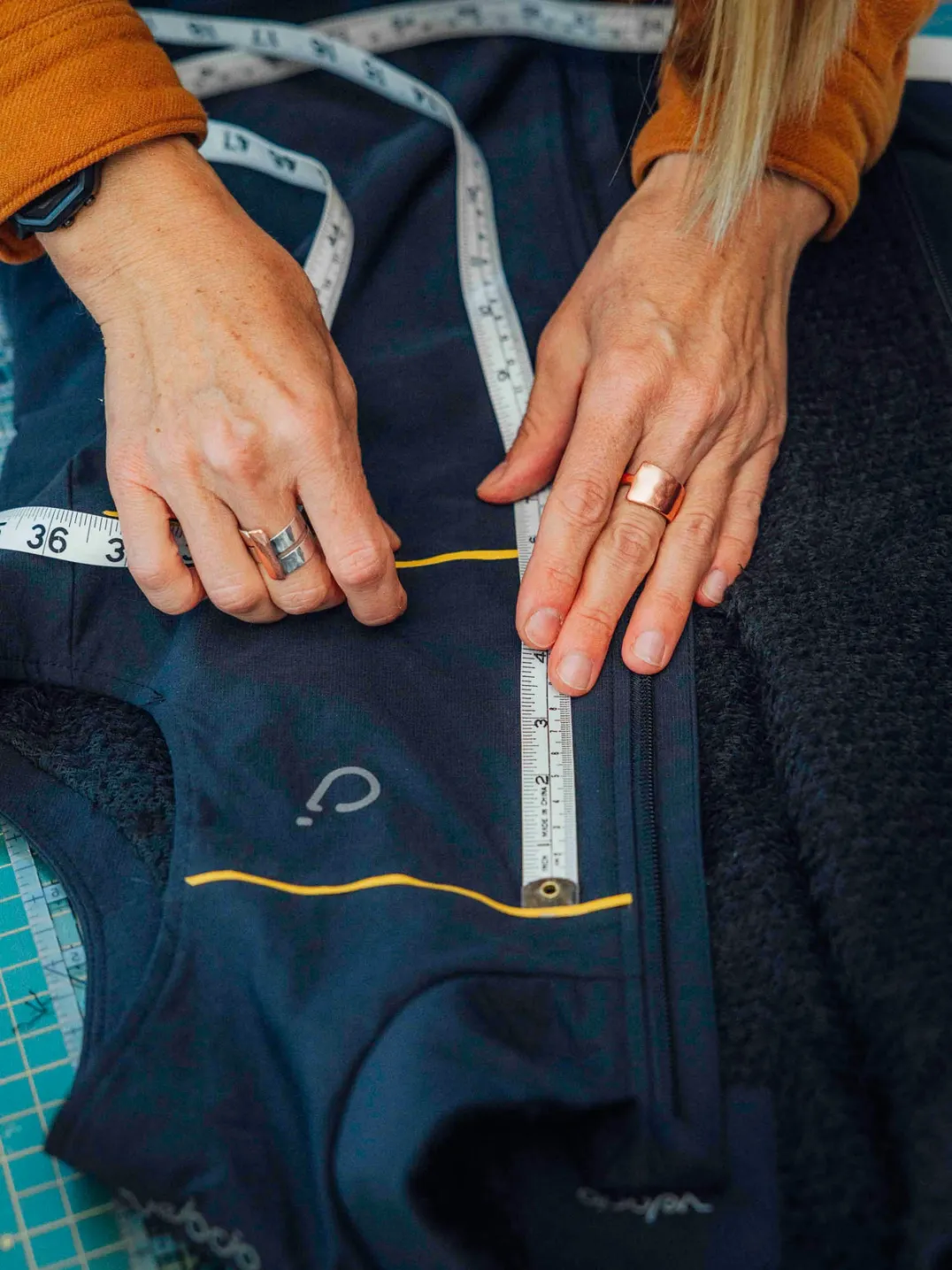

“You’re not just designing in theory; you’re designing from experience.”
Slow by Design
The process is purposefully slow, allowing for observation, iteration, and feedback. “There’s so much to learn by just riding with other people,” Tara says. “Watching how they layer, what they reach for in different weather, what they love and what they adjust—it all informs how we build.” Whether it’s a lightweight shell that must shed rain but stow easily mid-ride, or a pocket that needs to fit the phones riders actually carry, every refinement comes from experience. The result is apparel that adapts rather than dictates.
That adaptability runs deeper than fabric—it’s cultural. Velocio’s commitment to women’s apparel has never been about separation, but about inclusion: understanding fit, function, and the real needs of every rider. Tara rides with women’s groups throughout the Pacific Northwest, trading trail knowledge and fit feedback on climbs and descents alike. “When you’re a user of the product yourself, it becomes so much more meaningful,” Tara says. “You’re not just designing in theory; you’re designing from experience.”


“It’s about building relationships, not just placing orders”
Outlasting Seasons
That philosophy extends beyond the trail. The Velocio approach to long-lasting performance includes a repair program and an intentional resistance to overproduction. A jacket isn’t successful because it’s new; it’s successful because it endures. The team designs knowing each piece will face years of wear: seams placed where friction won’t find them, fabrics tested across hundreds of rides, colors chosen to transcend a single season.
And for all the precision, the work remains deeply human. When Tara’s not testing prototypes on the trail, she’s often pedaling her vintage 1970s Schwinn Stingray along rail trails with her dog chasing beside her—no metrics, no data, just the rhythm of the ride. She laughs that she’s one of the only people in the bike industry who doesn’t use Strava.
“It’s about the experience, not the numbers.” That simplicity—riding for the joy of it—reminds her why she designs in the first place. Each product is made to remove distractions, letting the ride be the reward.
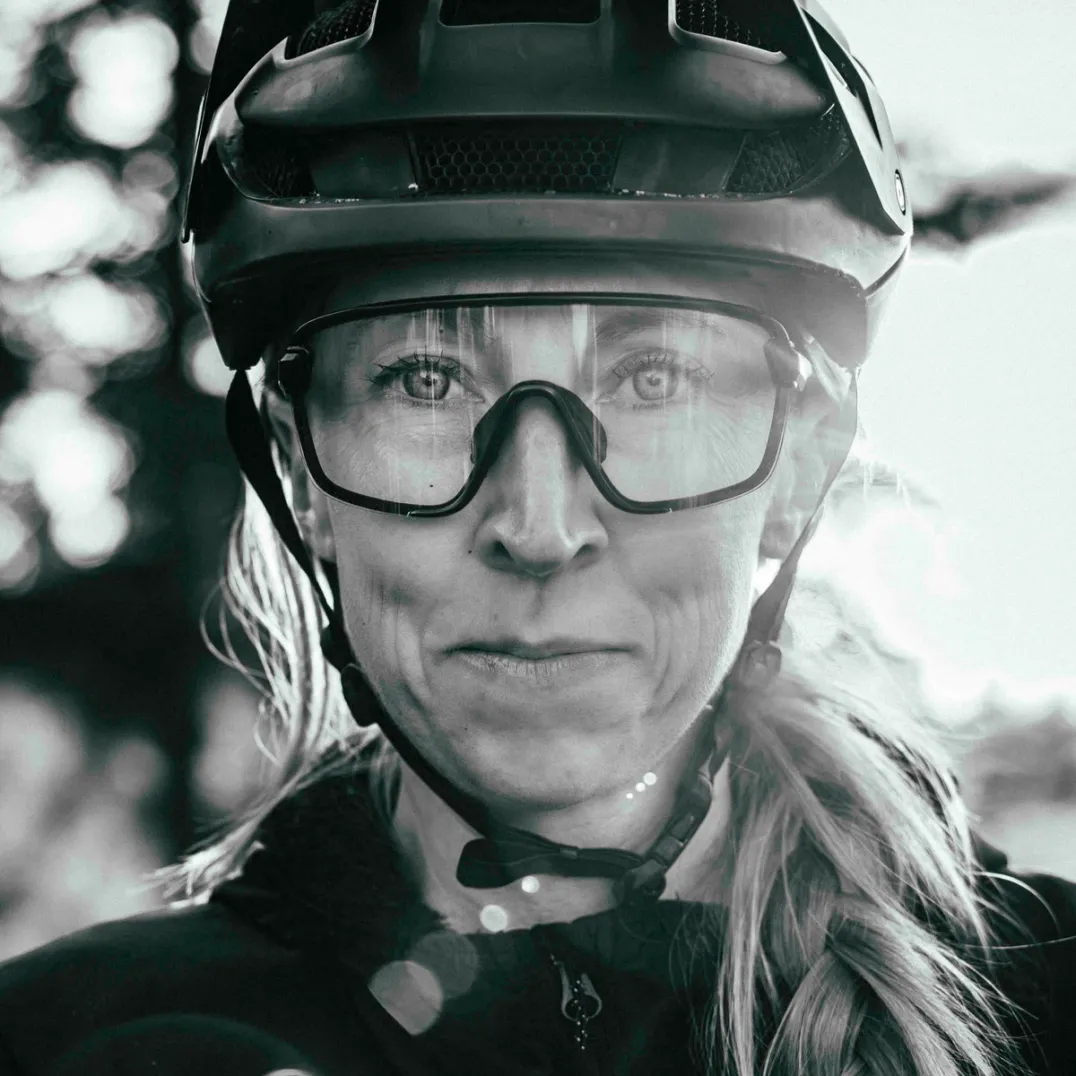
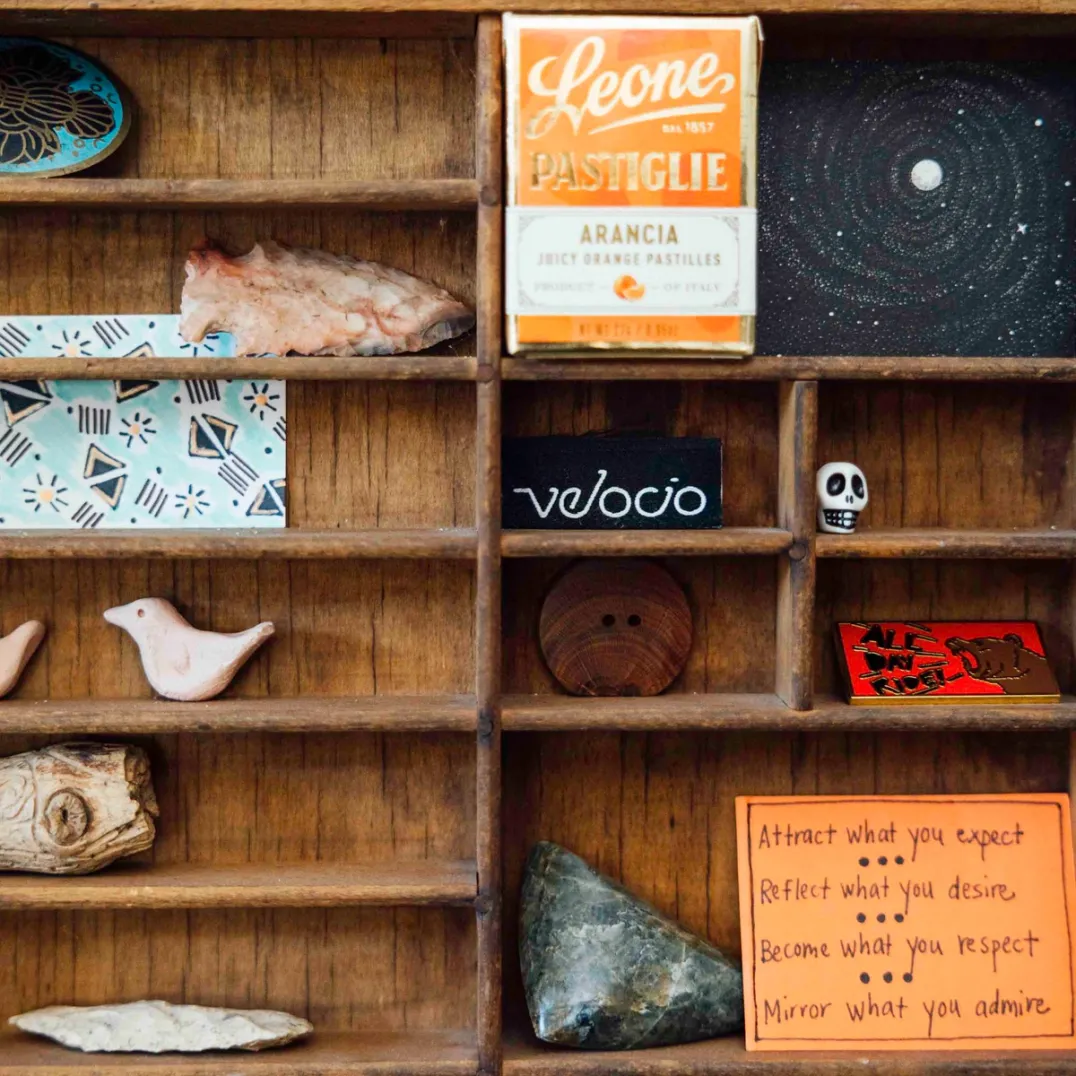
The result is kit that embodies Velocio’s three core pillars: culture, design, and long-lasting durability. Not separate goals, but a continuous thread. Apparel built to handle the unpredictable rhythm of the trail. Tested, refined, and responsibly made by people who live for the ride.
Velocio doesn’t just make cycling apparel. They make choices. To design slower. To collaborate deeper. To craft clothing that honors the terrain, the rider, and the process itself.
Because innovation isn’t an announcement. It’s a practice—a commitment, stitched in, ride after ride.